

What Is the Best Exercise for the Shoulder?
What Is the Best Exercise for the Shoulder?
If you’re trying to figure out the best exercise for your shoulder and you turn to Google for answers, you’ll likely end up more confused than when you started. One site recommends lateral raises, another praises the lat pulldown. So who’s right-and what should you actually pick? As your local neighborhood physical therapist, let me walk you through how | choose shoulder exercises and how | approach program design-so you can make better decisions without the noise.
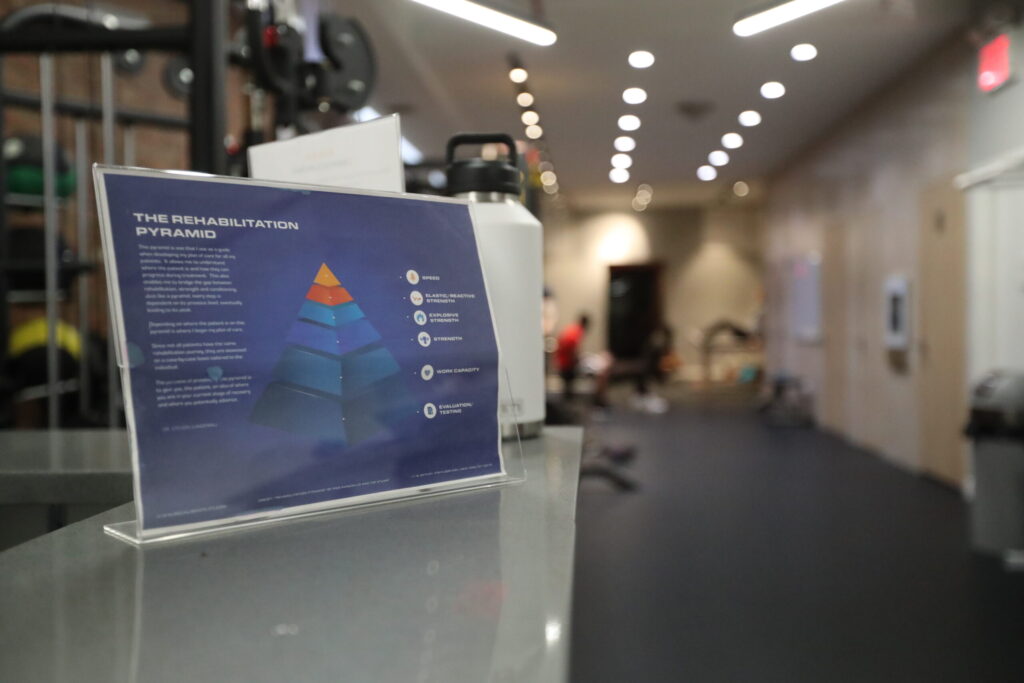
The Dinner Plate Analogy: How I Structure Workouts
Think about going out to dinner and ordering a steak. The steak is the main dish, but it’s not alone. You probably get some mashed potatoes, creamed spinach, or maybe roasted carrots as sides. Add in appetizers to start and dessert to finish, and you’ve got a full meal.
That’s how I think about programming:
- Appetizers = Warm-up
- Main course (steak) = Primary exercise
- Sides = Accessory lifts
- Dessert = Conditioning or cool-down work
This format helps keep workouts balanced, focused, and efficient.
First Things First: Range of Motion
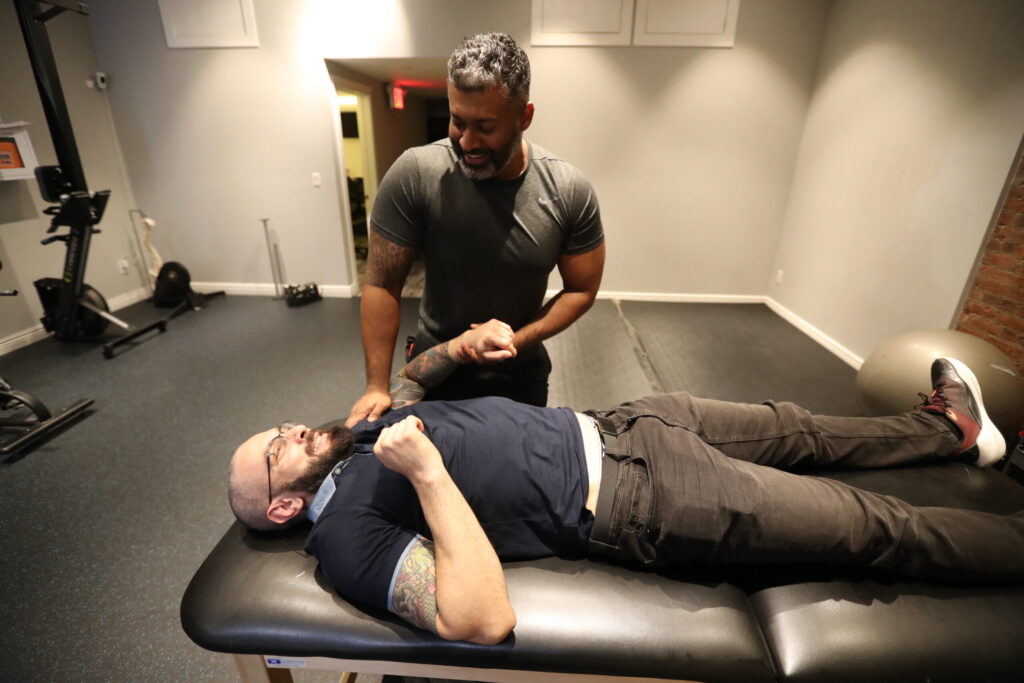
My job as a physical therapist starts with evaluating range of motion. Before prescribing any exercise, | need to know how well someone can move. For example, if a person can’t lift their arm above nose level, they’re not a good candidate for an overhead press-yet. It’s not about avoiding the movement forever; it’s about working within your current capacity and building up safely. When it comes to shoulders, | want exercises that train the joint through its full available range of motion. That leads me to two key movements: the overhead press and the lat pulldown.
Why These Two?
These exercises check two important boxes:
1. They train the shoulder through a full range of motion
2. They target both pushing and pulling muscles
That combination helps restore balance and function-something most people lack, especially if they sit a lot or spend too much time on isolated “mirror muscles.”
So, What’s the Best Shoulder Exercise?
If I had to pick just one-the star of the plate-it would be the overhead press. Here’s why.
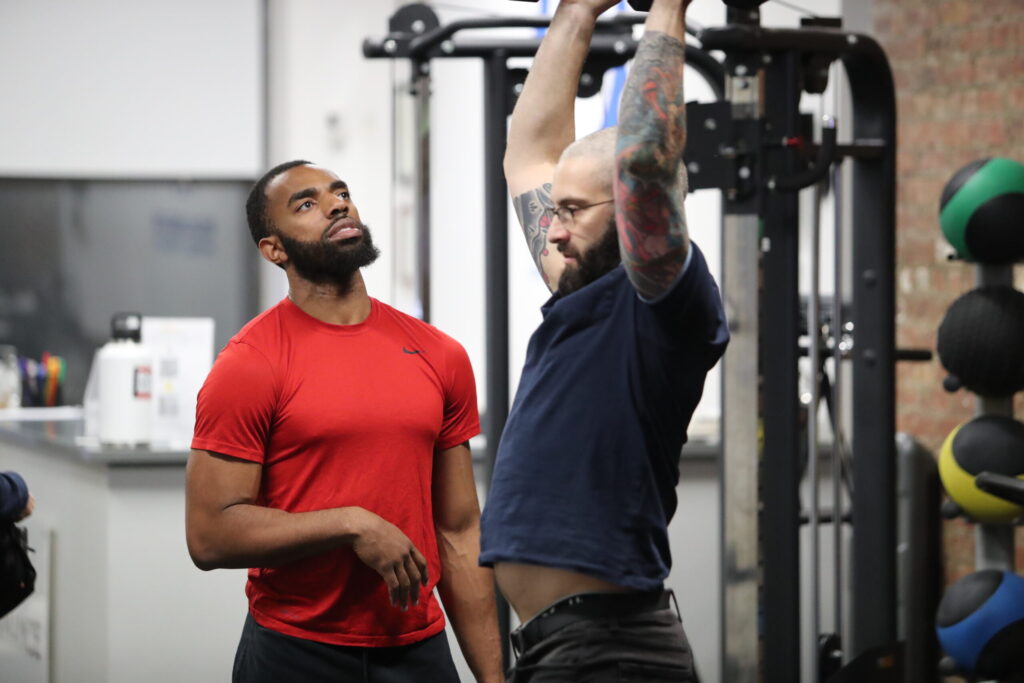
Our joints prefer compressive forces (think pushing weight downward into your spine or upward into your shoulder joint). These forces allow muscles to stabilize the joint effectively, almost like a suspension system in your car absorbing pressure.
On the other hand, joints don’t like shear forces-which slide or grind surfaces against one another. That’s like slamming your brakes and skidding your tires-it creates wear and tear. Over time, this can lead to pain, inflammation, or even injury.
The overhead press applies a healthy, compressive load to the shoulder and encourages surrounding muscles to contract and stabilize-especially the rotator cuff.
Understanding the Rotator Cuff (RTC)
Everyone talks about the rotator cuff like it’s four individual muscles doing different motions. But its main function isn’t just movement-it’s stability. Think of the RTC as a dynamic brace for your shoulder joint. Its job is to keep everything centered and secure while other muscles do the heavy lifting. And nothing challenges that stability like pressing a weight overhead with control and intention.
A Simple, Balanced Shoulder Routine
Here’s how I’d structure a basic shoulder program:
- Main Lift (Steak): Overhead Press
- Accessory Work (Sides): Front, Lateral, and Rear Delt Raises
- Stability Work (Dessert): 1-2 Rotator Cuff Exercises (like external rotations or banded holds)
And don’t skip the warm-up! That’s your appetizer-mobilize the thoracic spine, activate the shoulder stabilizers, and prep for pressing.

Final Thoughts
There’s no one-size-fits-all “best” shoulder exercise. But if your range of motion allows and your goal is long-term function, the overhead press deserves the spotlight. Train with structure, assess often, and build your plate like a pro-from warm-up to dessert.